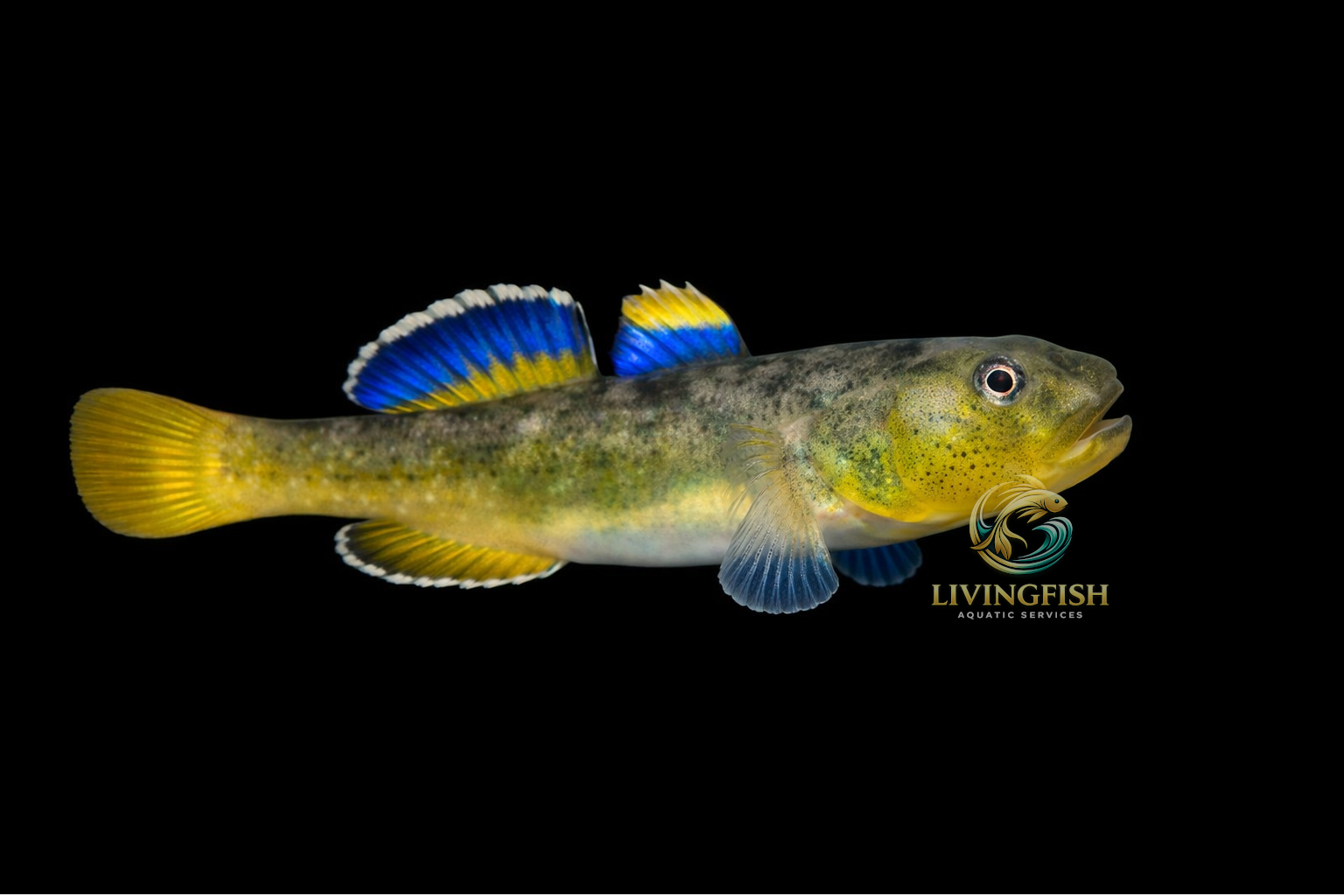

A Calm Soul From Harsh Places: The Australian Desert Goby
There are few fish that speak more eloquently of endurance than Chlamydogobius eremius, the Desert Goby. It lives where water itself seems an afterthought, in the salt lakes and ephemeral pools of Australia’s interior, where heat and dust rule most days of the year. Yet in those brief, shimmering oases, this small fish thrives with a quiet determination that would impress any keeper who values character over colour.
A Fish of Extremes
The Desert Goby’s world is one of extremes. Temperatures swing from near freezing to well above forty degrees, and salinity can shift from fresh to brine in a matter of weeks. In such conditions, most fish perish. The goby adapts. It tolerates what others cannot, adjusting its physiology to survive where water becomes more mineral than liquid. Watching one in a tank, you sense that resilience, a calm, unhurried creature that has learned patience from its environment.
Behaviour and Temperament
In the aquarium, the Desert Goby is a study in subtlety. It rests often, perched on the substrate like a sentinel, but bursts into motion with surprising speed when food appears. Males, especially in breeding condition, develop a rich golden hue with electric blue highlights along the fins, a desert sunrise captured in miniature. They guard their chosen cave or crevice with quiet authority, fanning eggs with care rather than aggression. Lambert would have admired that restraint; it is the mark of a fish that knows its place in the world.
Habitat and Care
To keep them well, one must think like the landscape they come from. A tank with sandy substrate, scattered stones, and a few caves suits them perfectly. They prefer still or gently filtered water, and they tolerate a wide range of hardness and salinity. Feeding is simple, small live foods, frozen fare, or quality pellets. They are not demanding, only steady. What they ask for is consistency, not luxury.
It is worth noting that Desert Gobies should not be kept with shrimp. Their opportunistic nature means any small crustacean will eventually be viewed as food, no matter how peaceful the goby may appear.
Breeding
Breeding the Desert Goby is one of the quiet pleasures of fishkeeping. The male courts with subtle displays, then guards the eggs until they hatch. The fry emerge sturdy and independent, ready to face a world that may dry up tomorrow. In that, they mirror their parents, survivors shaped by scarcity.