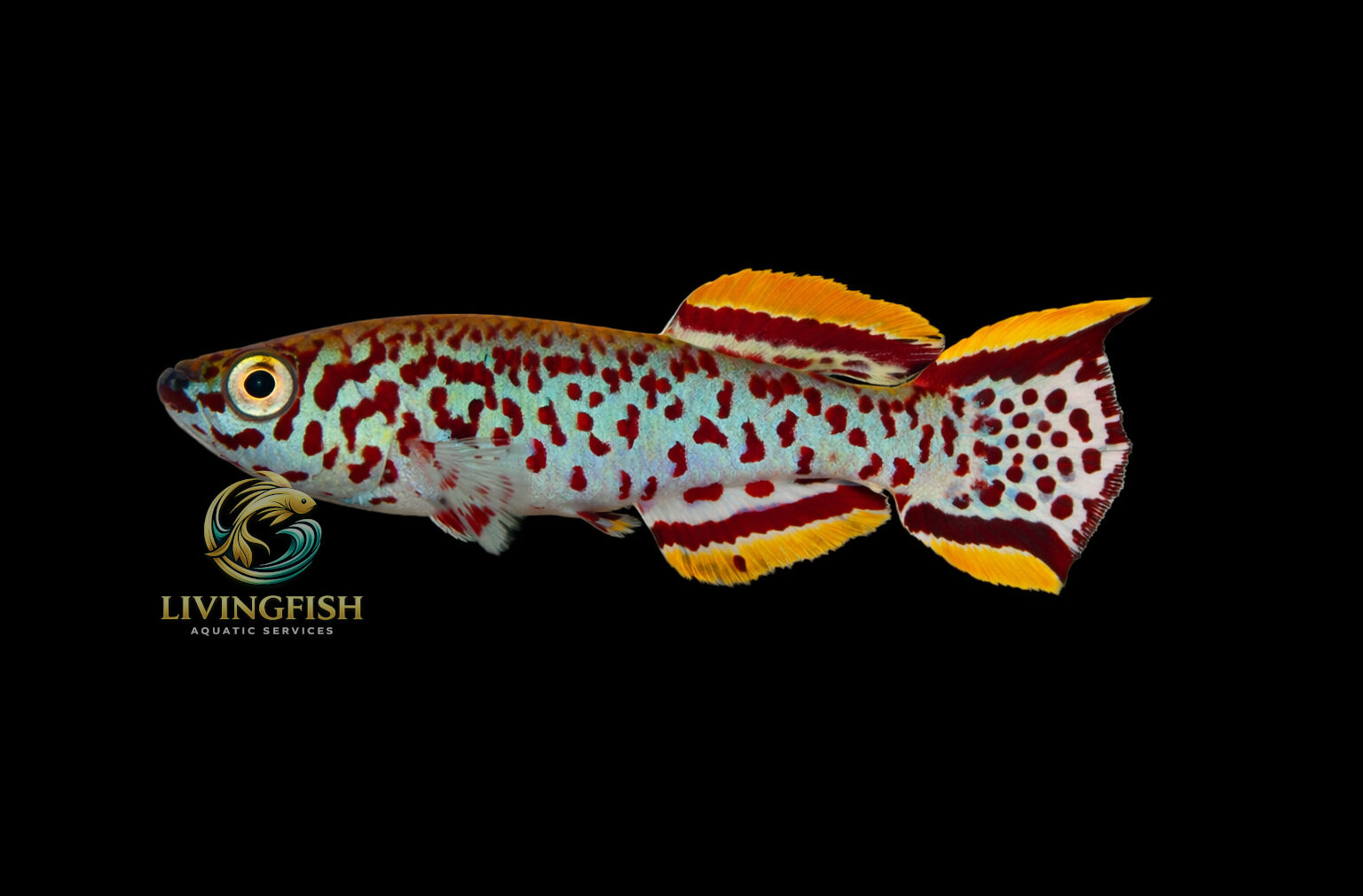

Fundulopanchax gardneri: A Brilliant and Iconic West African Killifish 🐟✨
Fundulopanchax gardneri, often known as Gardner’s Killifish or the Steel Blue Killifish, is one of the most admired species in the killifish hobby. Originating from Nigeria and Cameroon, this fish is celebrated for its vivid colours, lively personality, and dependable breeding behaviour. It is a favourite among both newcomers and experienced aquarists who appreciate striking freshwater fish with natural character.
Natural Habitat and Origins 🌍🍃
Fundulopanchax gardneri lives in shallow forest pools, small streams, and shaded swamps across West Africa. These waters are soft, acidic, and rich in leaf litter, creating dark, tannin stained environments. The species was named after R D Gardner, who collected early specimens during the twentieth century.
Many locality forms exist, each with its own unique colour pattern. Examples include Akure, Makurdi, Jos Plateau P82, Misaje, Lafia, and Nsukka. Keeping locality lines pure helps preserve the natural diversity of the species.
Appearance and Sexual Differences 🎨🐠
This species is famous for its intense and eye catching colours.
Males show a metallic blue or blue green body covered with bright red spotting. Their fins often display yellow or red edging, and males grow larger with more extended finnage.
Females are smaller and more subtle, with a tan or olive body and gentle mottling.
Adults usually reach between five and six and a half centimetres in length and live for two to four years.
Behaviour and Temperament 💫
Fundulopanchax gardneri is active, curious, and full of personality. They spend much of their time near the surface or midwater. Males can be territorial, especially when kept with other males.
Key behavioural notes
• Best kept as one male with two or three females
• Requires a secure lid because they are excellent jumpers
• Suitable for species tanks or peaceful community setups
• Avoid keeping them with fin nippers or overly active fish
Tank Setup and Water Conditions 🏡🌿
A natural, shaded aquarium suits this species perfectly. They thrive in soft water with gentle flow and plenty of cover.
Recommended conditions
• Temperature between twenty and twenty six degrees Celsius
• Slightly acidic to neutral water with a pH between five point five and seven point five
• Soft to moderately soft hardness between four and twelve dGH
• A minimum of thirty eight litres for a pair or trio
• Dense planting, floating plants, leaf litter, and dark substrate
These conditions help replicate their natural environment and bring out their strongest colours.
Diet and Feeding 🍽️🦐
Fundulopanchax gardneri is a micro predator that enjoys small, protein rich foods.
They readily accept
• Frozen foods such as bloodworm, daphnia, and brine shrimp
• Live foods including mosquito larvae, baby brine shrimp, and grindal worms
• High quality micro pellets for carnivores
Live foods are especially helpful when conditioning adults for breeding.
Breeding Fundulopanchax gardneri 🐣🌱
Breeding this species is simple and rewarding. They spawn readily in well maintained aquaria.
Breeding method
• Use a separate spawning tank with soft water and either Java moss or spawning mops
• Keep more females than males to reduce pressure on the females
• Eggs are adhesive and can be collected from mops or plants
• Fry hatch easily and accept newly hatched brine shrimp from the start
This species does not require peat drying or a dry incubation period. They breed continuously under the right conditions.
Locality Forms and Colour Variants 📍🎨
Each locality form has its own charm. Some well known examples include
• Akure with intense blue tones and dense red spotting
• Jos Plateau P82 with deep steel blue colour and bright yellow edging on the tail
• Misaje with strong blue saturation and fewer red spots
• Lafia, Makurdi, Nsukka, and Udi with their own distinctive patterns
These forms highlight the natural diversity within the species.
Why This Species Remains a Favourite ❤️🐟
Fundulopanchax gardneri offers a rare combination of beauty, personality, and ease of care. Its vivid colours, lively behaviour, and reliable breeding make it one of the most rewarding killifish to keep. Whether displayed in a natural planted aquarium or maintained as a breeding project, this species continues to captivate aquarists around the world.