
The History of the Rainbow Shark
Epalzeorhynchos frenatum
Few freshwater aquarium fish are as instantly recognisable as the Red Fin/Rainbow Shark. Decades after first entering the aquarium hobby, its striking appearance, active personality and bold territorial behaviour continue to make Epalzeorhynchos frenatum a favourite among tropical fishkeepers worldwide.
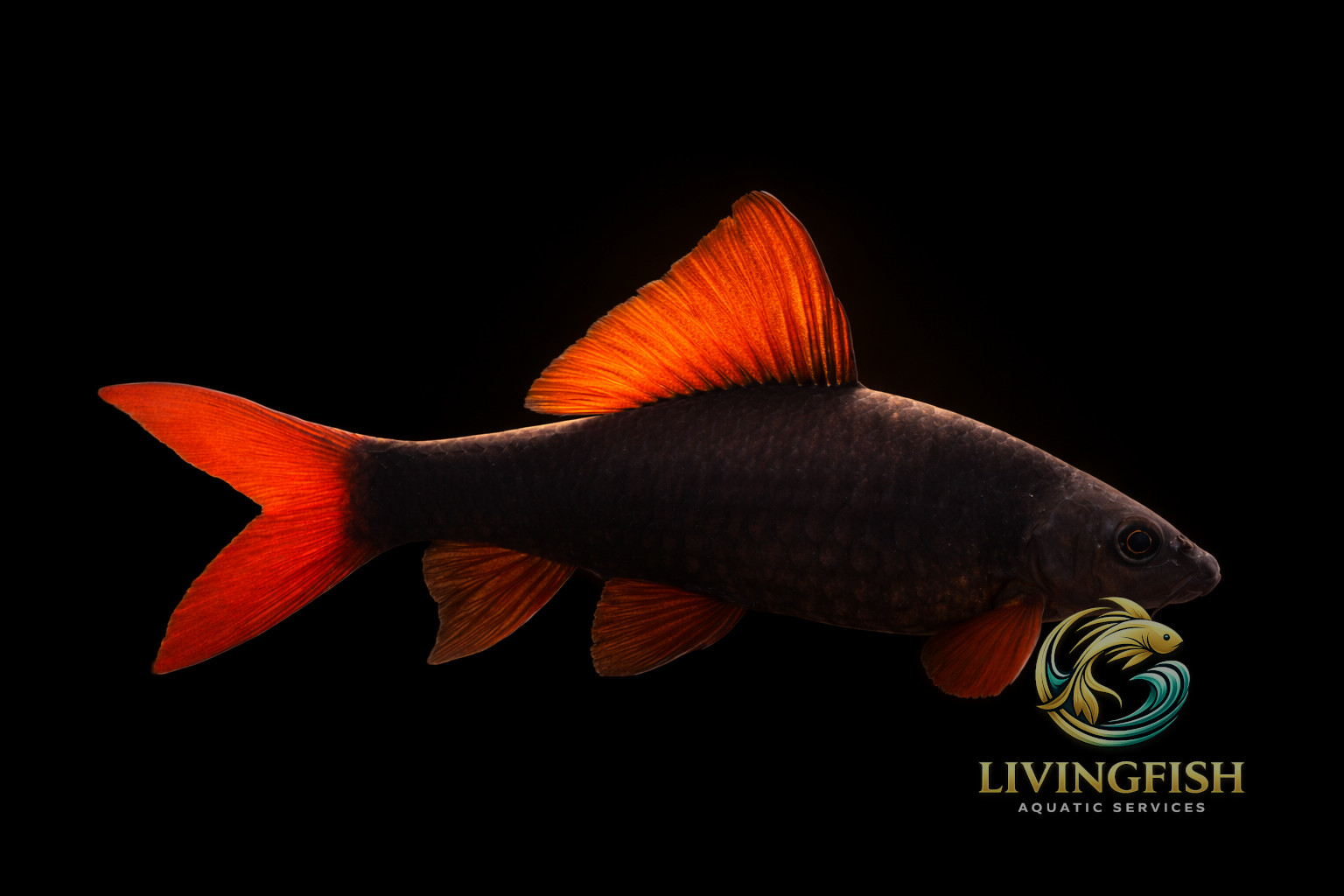
With its dark velvety body and vivid red fins, the Rainbow Shark remains one of the classic freshwater aquarium species. While not a true shark in any biological sense, Epalzeorhynchos frenatum has certainly earned its place as one of the most iconic “shark” fish within the fishkeeping world.
Despite the common name, the Rainbow Shark is not a true shark at all. Instead, it belongs to the carp and minnow family, Cyprinidae, and is more closely related to barbs, rasboras and true freshwater minnows than any marine shark species.
Discovery and Natural Origins
Epalzeorhynchos frenatum was first scientifically described in 1934 by the British zoologist Henry Weed Fowler.
The species originates from Southeast Asia, where it is naturally found throughout river systems in:
- Thailand
- Laos
- Cambodia
Historically, Rainbow Sharks inhabited warm tropical rivers, floodplains and heavily vegetated waterways connected to the Mekong and Chao Phraya river basins.
In the wild they are typically found near the riverbed, where they spend much of their time grazing algae, biofilm and small organisms from rocks and submerged surfaces.
Why Is It Called a “Shark”?
The name comes entirely from appearance and behaviour rather than biology.
Rainbow Sharks possess:
- a tall triangular dorsal fin
- a torpedo-shaped body
- strong cruising behaviour
When swimming through an aquarium, especially with the dorsal fin erect, they vaguely resemble miniature sharks. The bright red fins then gave rise to the common name “Rainbow Shark.”
Closely related species such as Epalzeorhynchos bicolor, commonly known as the Red Tail Shark, share similar body shapes and behaviours and were often imported alongside Rainbow Sharks during the early years of the tropical fish trade.
Introduction Into the Aquarium Hobby
Rainbow Sharks became widely established within the aquarium hobby during the 1960s and 1970s as tropical fish exports from Southeast Asia increased dramatically.
Fishkeepers were immediately attracted to:
- their bold colour contrast
- active swimming behaviour
- algae-grazing habits
- relatively hardy nature
Unlike many delicate tropical fish available at the time, Rainbow Sharks adapted well to aquarium life and tolerated a fairly wide range of water conditions.
By the 1980s they had become one of the most commonly available “shark” species in aquarium shops across Europe and North America.
Selective breeding later produced the popular Albino Rainbow Shark, which remains widely available within the aquarium trade today.
Temperament and Territorial Nature
Although often sold as community fish when young, Rainbow Sharks are well known for becoming increasingly territorial with age.
Juveniles are usually peaceful, but mature fish often establish territories around:
- caves
- bogwood
- rock formations
- preferred resting areas
In smaller aquariums they may chase:
- other bottom dwellers
- similar-shaped fish
- members of their own species
This behaviour mirrors their natural territorial instincts in the wild, where they compete for feeding and grazing areas along riverbeds.
Minimum Aquarium Size
For a single adult Rainbow Shark:
- Minimum: 240 litres (around a 4 ft / 120 cm tank)
- Ideal: 300–450 litres for a well-balanced community setup
Although juveniles are often sold very small, adults can reach:
- 15 cm (6 inches)
- sometimes slightly larger in spacious aquariums
They are active cruising fish that require floor space more than height.
With proper care, Rainbow Sharks can often live for 8–10 years in captivity.
Water Conditions
Ideal parameters:
- Temperature: 24–27°C
- pH: 6.5–7.5
- Moderate flow
- Well-oxygenated water
They also appreciate very clean water and strong filtration, reflecting the flowing river systems they naturally inhabit.
Conservation and Wild Populations
Although Rainbow Sharks remain extremely common within the aquarium trade today, wild populations have faced increasing pressure from:
- habitat destruction
- pollution
- dam construction
- river modification and wetland loss
Fortunately, the majority of Rainbow Sharks sold within the modern aquarium trade are now commercially bred rather than wild-caught, helping reduce pressure on natural populations.
A Lasting Aquarium Favourite
Today, the Rainbow Shark remains one of the classic tropical aquarium species. Its bold colours, active behaviour and strong personality continue to make it a favourite centrepiece fish for larger freshwater aquariums around the world.