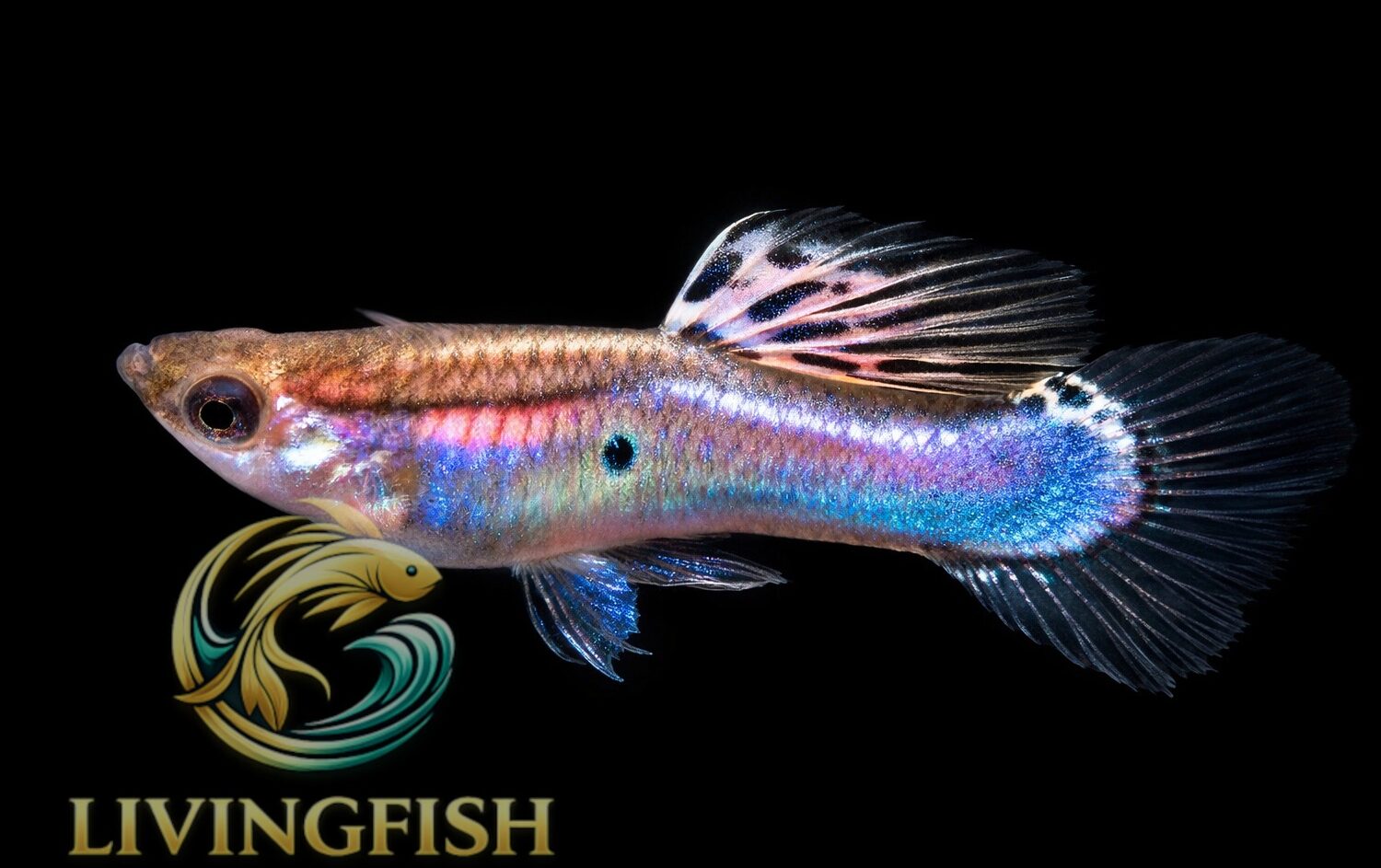

Few guppy strains have had the long-term influence of the Japan Blue guppy. Recognised for its intense metallic blue sheen and reflective body, this naturally occurring mutation became one of the most admired and widely used colour genes in modern livebearer breeding.
More than three decades later, the unmistakable metallic blue remains one of the most iconic sights in the guppy world.
Where Was Japan Blue First Found?
The original Japan Blue trait is believed to have originated from a feral population of guppies collected from the nature in the Kanagawa Prefecture, Japan, during the late 1980s.
Unlike many fancy guppy strains created entirely through selective breeding, the Japan Blue trait appears to have occurred naturally in feral guppies living within Japanese waterways before later being stabilised by breeders in the hobby. Japanese breeders quickly recognised the uniqueness of the trait and began isolating and refining the genetics through careful selective breeding.
By the late 1990s the strain had already spread internationally through the aquarium hobby. I personally kept and bred Japan Blue guppies in the UK as early as 1999, at a time when they were still relatively uncommon and highly sought after among livebearer enthusiasts.
Over the years, the Japan Blue gene has become the foundation for countless modern strains, being incorporated into:
- tuxedos
- mosaics
- grass strains
- double swords
- snakeskins
- albino lines
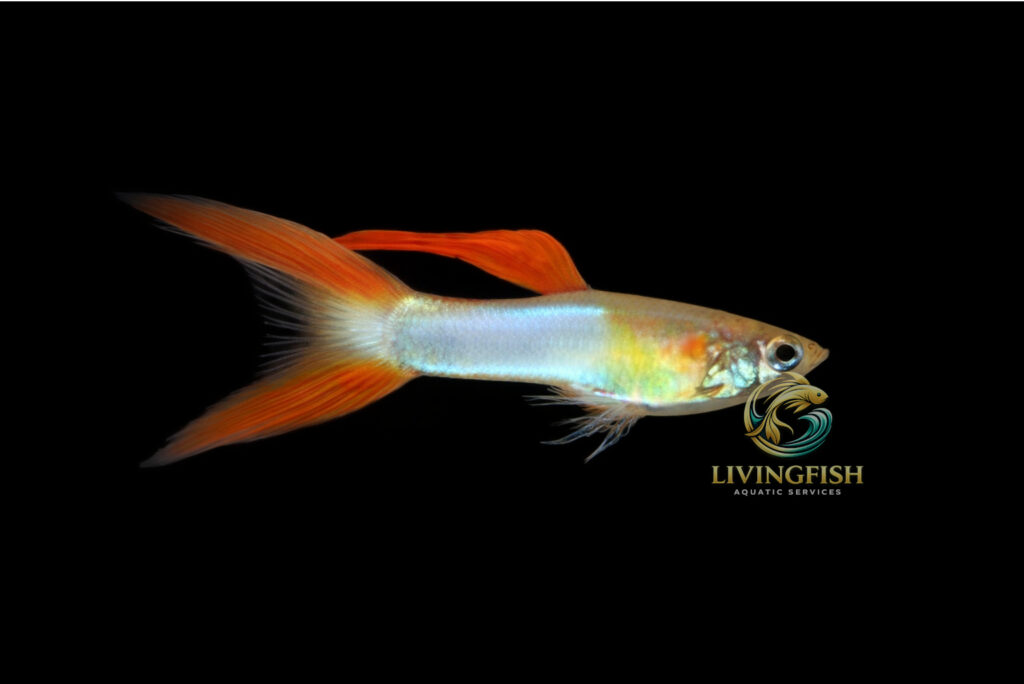
Even today, many modern designer guppies still carry traces of the original Japan Blue genetics.
Why Are the Males So Blue?
The vivid metallic blue seen in Japan Blue males comes from specialised pigment and reflective cells within the skin.
Male guppies contain several different types of colour cells, including:
- Iridophores - reflective metallic cells responsible for shimmer and structural colour
- Melanophores - black pigment cells
- Xanthophores - yellow pigment cells
The Japan Blue gene greatly enhances the reflective blue iridophores along the body and caudal peduncle, producing the metallic electric-blue appearance the strain is famous for.
Unlike ordinary pigment, this blue colour is structural and reflective, meaning the fish can appear to glow or change intensity depending on lighting and viewing angle.
Are Japan Blue Guppies Actually Endlers?
In general, no.
Sadly, many breeders and sellers discovered that adding the word “Endler” increased the value and popularity of the fish. As a result, many Japan Blue guppies were incorrectly marketed as Endlers despite clearly showing guppy characteristics.
When comparing them to true Poecilia wingei, several subtle but important differences become noticeable:
- the body is usually larger and deeper
- the caudal peduncle is broader
- the dorsal fin is larger
- the fins often carry far more colour and patterning than a true wild Endler
True Endlers tend to have:
- slimmer torpedo-shaped bodies
- smaller finnage
- more compact natural markings
Many fish sold today as “Japan Blue Endlers” are actually guppy-Endler hybrids rather than pure Endlers.
A Lasting Legacy
More than thirty years after its discovery, Japan Blue remains one of the most recognisable and influential genes within the guppy hobby. Whether seen in traditional strains or modern hybrids, its unmistakable metallic blue continues to captivate breeders and aquarists around the world.